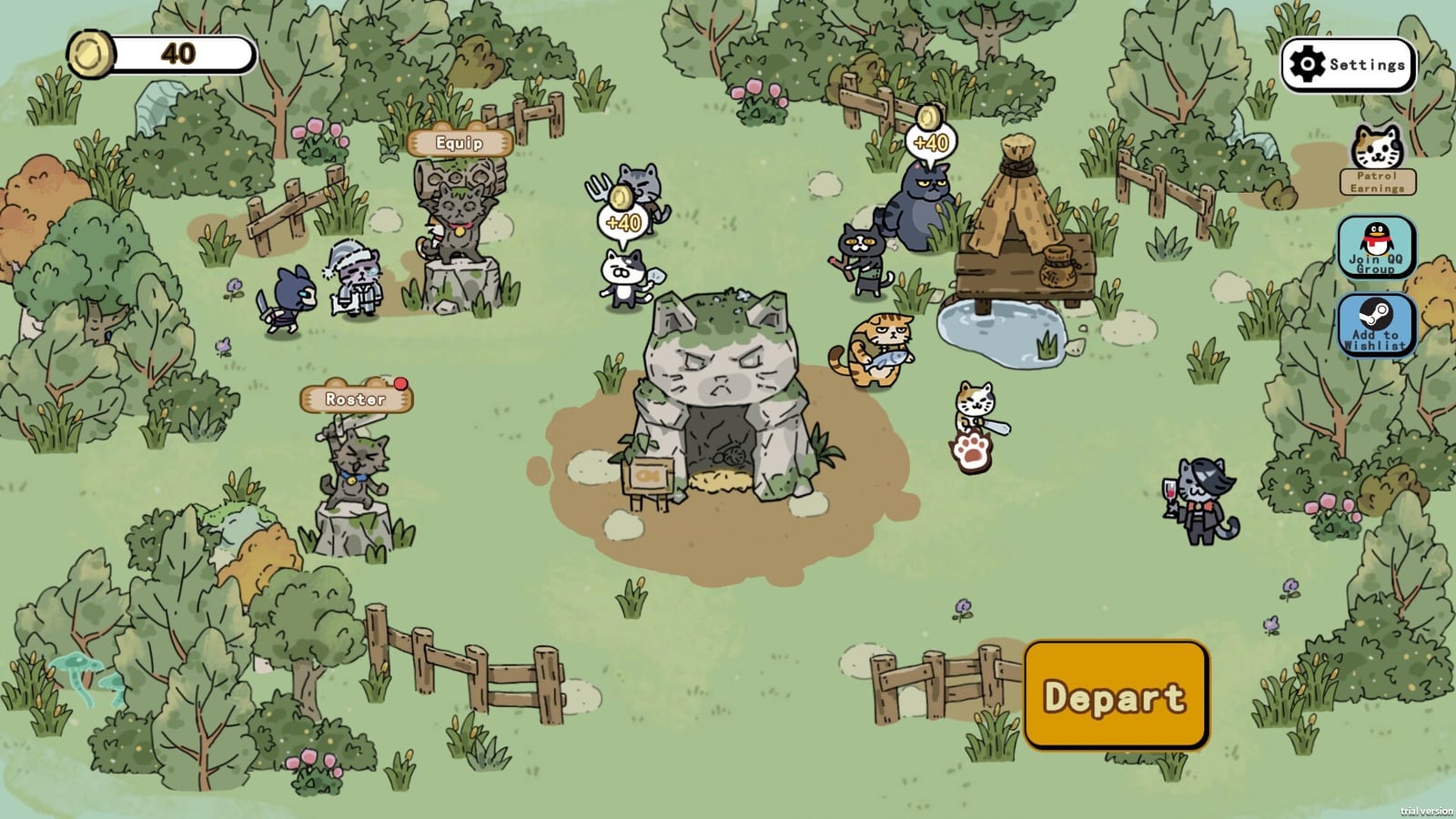
How to Build a Deck in Claws Of Power
The four rules that hold together every strong deck, from the alley stages to Lord mode.
Most players treat deck building in Claws Of Power like a collection game — grab the cats you like the look of and slot them in. The players who clear the second island quickly do something different: they treat the deck as a system of roles and the cats as interchangeable parts. This page explains that system.
The four roles every deck needs
Claws Of Power only has a handful of cat archetypes, but every strong deck runs the same ratio. Aim for two melee tanks, two ranged DPS, one support, and one flex slot you swap around as the level demands. A pure frontline does not work because the enemy base regenerates faster than your tanks can push. A pure backline does not work because the enemy lane spawns faster than your DPS can kill. The 4-2-1-1 mix is the sweet spot on every level above 15.
If you only own three roles, that is fine for the first island. By level 20 you should have all four or you will start rerolling fights with the enemy base. Read the S-Tier Cat Tier List to figure out which cats in each role are worth over-investing in.
Why item timing beats raw stats
Every battle item costs a small amount of dried fish and triggers a one-shot effect. The mistake players make is treating items as emergency buttons and burning them at the start of a fight. Items win fights when you use them at the enemy lane flip — the moment in the second minute of a fight when the enemy switches their spawn lane to your back line.
Hold items for the lane flip. If you press one early, you spend it on the spawn that would have died anyway.
Equipment matching matters, but not the way you think
Each cat has two equipment slots that can hold a stat bonus or a passive effect. The natural assumption is to max out the strongest cat. The empirical rule is the opposite: equipment is most effective on the cats you least expect to survive the fight, because a single DPS tick on a fragile back-line DPS is the difference between clearing the wave and losing it.
Match equipment to role, not to cat. Frontline melee wants HP and armor; backline DPS wants attack speed; support cats want dried-fish-per-second. The full list of useful items lives on the How to Use Items page.
When to swap cats mid-deck
The Deck Builder lets you test loadouts without spending resources. Use it before you replace anything in your real deck. The default swap rule is: replace your weakest melee whenever your reserve crosses three new melee cats, and replace your support only when you roll a support with a passive that triggers on the lane flip.
Do not chase the top of the tier list blindly. If your existing melee cat is level 7 and your new melee cat is level 1, the level gap outweighs the role benefit for the first two islands. Plan your swaps around the levels where the role boost matters more than the level delta.
Once your deck handles the early chapters, return here to refine your archetype choice for the next difficulty tier.
Frequently Asked Questions
Fast answers to the questions players ask most.
What is the best deck composition for the second island?
Two melee tanks, two ranged DPS, one support, and one flex. The flex is usually a ranged cat with a slow effect because lane flips happen twice per fight on the second island.
How do I open my deck-building options without spending real money?
Skip the launch crates and finish every stage up to 25 for guaranteed cat unlocks. By stage 25 you should have at least sixteen cats covering four roles, which is enough to build any 4-2-1-1 deck from the [Best Starter Deck](/tier-list/best-starter-deck/) recommendations.
Is there a tool I can use to test decks before committing?
Yes. The [Deck Builder](/tools/deck-builder/) lets you drop cats into a loadout, check role balance, and share the loadout via URL.